Consumer Rights
New Jersey Balcony Solar Law: What Homeowners and Renters Should Know
New Jersey has approved a new framework for qualifying plug-in solar devices, but the law does not take effect until March 1, 2027 and it does not eliminate every safety or property requirement.
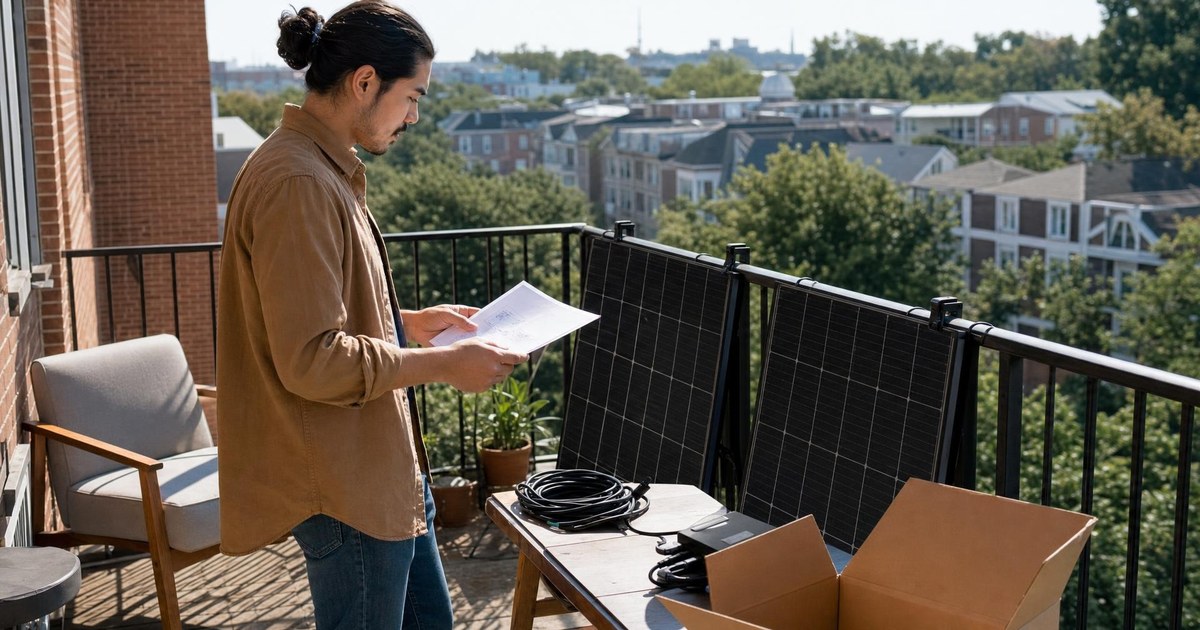
New Jersey has enacted the Garden State Balcony Solar Act, creating a path for qualifying portable solar devices that connect through a standard 120-volt outlet. The change could make small-scale solar more accessible to renters, apartment residents, condominium owners, and homeowners without a suitable rooftop. It is not an immediate permission slip for every product or installation.
The law was signed on September 1, 2026, but takes effect six months after enactment, on March 1, 2027. Until then, consumers should continue following the rules that currently apply to their utility service, property, equipment, electrical work, and local approvals.
What New Jersey approved
Governor Mikie Sherrill signed Senate Bill 2368 and Assembly Bill 4836 on September 1, 2026. The new law defines a qualifying portable solar generation device and removes several barriers that ordinarily apply to grid-connected solar equipment. It also limits how utilities, municipalities, landlords, homeowners associations, condominium associations, and similar property-governance organizations may restrict qualifying devices.
The framework is aimed at small systems that primarily offset electricity being used inside the home. It is different from a conventional rooftop solar project with a larger array, a dedicated interconnection process, and net-metering credits. The law should not be read as applying its simplified rules to every portable panel, battery, microinverter, or home electrical setup.
When the balcony solar law takes effect
The final bill text states that the act takes effect six months after enactment and allows the New Jersey Board of Public Utilities to take anticipatory implementation steps before that date. Because the governor signed it on September 1, the operative date is March 1, 2027.
That delay matters. A product advertised as balcony solar may still fall outside the new definition, and the new exemptions are not yet effective merely because the bill has been signed. Consumers considering a purchase before March should verify the current requirements instead of relying on a seller's claim that New Jersey has already removed every approval or installation rule.
Which portable solar devices qualify
Under the enacted framework, a portable solar generation device must satisfy several conditions. The equipment must be movable, connect to the building through a standard 120-volt alternating-current outlet, sit on the customer's side of the electric meter, and be intended primarily to offset part of the customer's own electricity use.
- Combined output is generally limited to no more than 1,200 watts at one service address or, in multifamily housing, one dwelling unit.
- The device must be listed or certified to UL 3700, a comparable standard, or a combination of standards that addresses plug-in photovoltaic safety and parallel operation with the grid.
- The equipment must include a device or feature that prevents it from exporting power to the electric distribution system during a power outage.
- The installation must follow the applicable product listing and applicable electrical and construction-code provisions, subject to the law's limited exception for certain devices rated at 400 watts or less.
The 400-watt provision is narrower than the overall 1,200-watt device limit. A qualifying device that sends 400 watts or less to the receptacle outlet is exempt from provisions that would require alterations to the premises, wiring, or electrical panels. That does not make all systems up to 1,200 watts exempt from every installation rule.
Utility approval and net metering are separate issues
Once the law is effective, a qualifying device is exempt from the ordinary requirement to obtain or execute an interconnection agreement before operation. An electric public utility also may not require prior approval, impose a device-related fee or charge, or require controls or equipment beyond what is integrated into the qualifying device.
The same law exempts these devices from net-metering program requirements. That simplification should not be confused with a promise of credits for excess electricity. The equipment is intended primarily to offset electricity being consumed in the home, and consumers should evaluate savings claims using the product's realistic output, placement, shading, household usage, electricity price, and the law's no-export requirements.
What renters, landlords, and HOAs should know
The act prevents a landlord from broadly prohibiting a qualifying tenant who pays for the electricity used in the leased premises from using a portable solar device within the leased premises, including a leased balcony or patio. The tenant must provide written notice at least 14 days before placement or use. The notice must document that the device meets the statutory requirements and identify the proposed location.
Landlords may impose reasonable restrictions on dimensions, placement, or the manner of placement and may restrict use elsewhere on their property. The law also addresses responsibility for damage and permits certain indemnification requirements involving injury or property damage caused by negligent installation, maintenance, or use.
Homeowners associations, condominium associations, cooperative housing corporations, and similar organizations may not enforce a blanket prohibition that conflicts with the act. They may still establish reasonable restrictions concerning size, placement, or installation. Owners and tenants should keep the device documentation and request any property rules in writing before spending money.
Municipal limits do not erase safety requirements
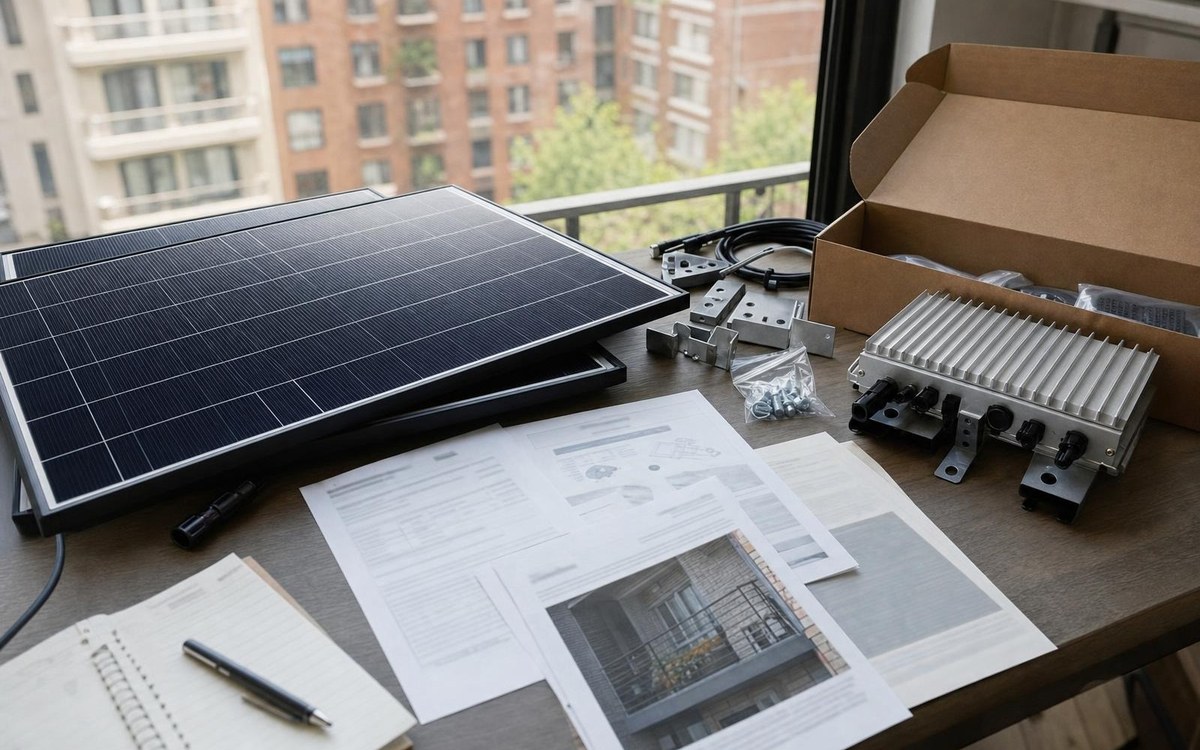
A municipality may not prohibit a qualifying portable solar device on residential property or require a permit, application, fee, license, or other approval for the device itself. The bill also says this restriction does not exempt building modifications, electrical work, or other alterations from applicable code, permit, or inspection requirements.
Small and portable does not mean risk-free. Follow the product listing and installation instructions, verify that the equipment meets the law's safety definition, and use a qualified electrical professional when the condition of an outlet, circuit, panel, mounting location, or proposed alteration is uncertain.
What to check before buying a plug-in solar system
- Confirm the effective date and do not assume the new exemptions apply before March 1, 2027.
- Get the exact model number, output rating, safety listing or certification, warranty, installation instructions, and return policy in writing.
- Verify that the complete system, including associated equipment, fits the statutory definition and combined output limit.
- Inspect the proposed location for secure mounting, shading, weather exposure, emergency access, and any reasonable property restrictions.
- If you rent, prepare the required written notice and supporting documentation at least 14 days before placement or use.
- Treat savings projections cautiously. Ask which assumptions were used and remember that the statute does not promise net-metering credits or a particular reduction in your bill.
- Keep advertisements, product specifications, receipts, messages, property notices, and installation records together.
What this means for an existing rooftop solar agreement
The Garden State Balcony Solar Act does not automatically change an existing rooftop solar loan, lease, power purchase agreement, warranty, interconnection agreement, or net-metering arrangement. A small plug-in device and a conventional rooftop system operate under different technical and contractual frameworks.
If a seller uses the new law to make claims about an existing agreement, a promised bill reduction, a system upgrade, or your ability to cancel a contract, preserve the sales materials and compare the statement with the actual documents. Solar Exit can help organize those records and review the practical questions in your solar situation. We are not a law firm and do not provide legal, tax, or electrical advice.
New Jersey balcony solar FAQs
Can I install a balcony solar device in New Jersey today?
Do not rely on the new act as immediately effective. It takes effect on March 1, 2027. Before then, verify the rules that currently apply to the equipment, utility service, property, electrical work, and municipality.
Is every system rated at 1,200 watts or less covered?
No. Output is only one part of the definition. The system also must meet the connection, location, intended-use, certification, outage-protection, and installation requirements in the act. The combined output limit applies by service address or dwelling unit.
Does the law guarantee lower electric bills?
No. A qualifying device is intended to offset some household electricity consumption, but actual output and savings depend on the system, placement, sunlight, household usage, electricity price, and other conditions. The law does not guarantee a savings amount or net-metering credit.
Can a landlord or HOA still set rules?
Yes. The act limits blanket prohibitions, but allows reasonable restrictions involving dimensions, placement, or the manner of placement. Tenants also have a 14-day written-notice requirement and must provide specified documentation. The facts of the property and proposed installation still matter.
Sources Reviewed
- New Jersey Governor's Office, Garden State Balcony Solar Act signing announcementReviewed September 3, 2026Confirms the September 1, 2026 signing, bill numbers, stated purpose, 1,200-watt limit, and general utility, property, and municipal treatment.
- New Jersey Legislature, Senate Bill 2368 Third ReprintReviewed September 3, 2026Supports the enacted framework described in the article, including the statutory device definition, certification and outage-protection requirements, output limits, utility exemptions, tenant notice, reasonable restrictions, municipal boundaries, and six-month effective date.
- Solar Power World, New Jersey governor signs balcony solar bill to lawReviewed September 3, 2026Preserves the originating TESS source provenance. Material legal and policy claims were independently checked against the official New Jersey sources listed above.